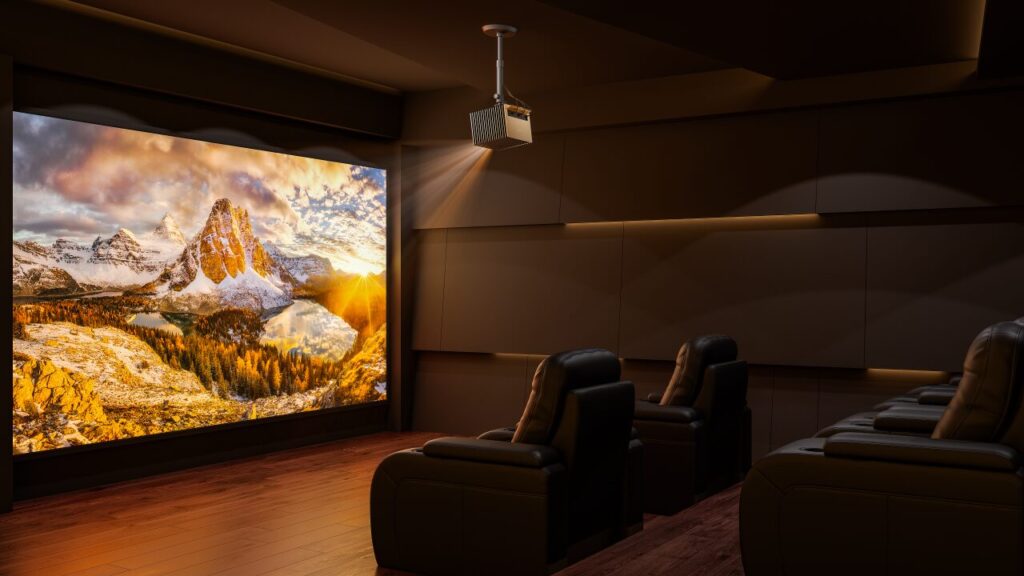
For many renters, the dream of a home theater often feels incompatible with the reality of a lease agreement. The typical image of a cinema setup involves heavy brackets bolted into studs, channels cut into drywall for wiring, and permanent ceiling mounts—all of which are nightmare scenarios for getting a security deposit back. Consequently, many tenants resign themselves to standard televisions, believing that a massive, immersive projection experience is a luxury reserved for homeowners.
This assumption, however, is outdated. The modern projection landscape is incredibly adaptable, offering high-performance solutions that require zero drilling, no permanent modifications, and can be packed up in boxes the moment it is time to move. In fact, due to their portability and flexibility, projectors are often a superior choice for renters compared to bulky flat-screen televisions. By utilizing clever mounting hacks, portable screens, and smart furniture placement, any rental apartment can be transformed into a cinema without leaving a trace.
Why Projection Is the Ultimate Renter Hack
Moving a 75-inch television is a logistical challenge. It requires two people, careful maneuvering through narrow hallways, and a significant amount of protective packaging. A projector, by contrast, can often fit in a backpack or a small box. This portability is the primary advantage for those who move frequently. Beyond just ease of transport, projectors offer versatile image sizing. In a small studio apartment, you might project a 60-inch image, but if your next rental has a large living room, that same device can easily scale up to 120 inches. This adaptability makes projection technology a future-proof investment for renters whose living environments may change every few years.
Mastering the Art of Shelf Placement
One of the simplest ways to integrate a projector into a rental without drilling is to utilize the vertical space you already have. Bookshelves, tall cabinets, and room dividers can serve as perfect staging grounds for your equipment. By placing the unit on a high shelf, you can emulate the projection angle of a ceiling mount without driving a single screw into the plaster.
This setup works best with devices that offer lens shift capabilities, which allow you to physically move the image up, down, left, or right without moving the unit itself. It is also the ideal scenario for a premium viewing experience. Investing in a high-quality 4K projector allows you to maintain incredible image fidelity and sharpness, even if the throw distance varies slightly from room to room. Placing such a powerful device on a secure shelf ensures it stays ventilated and safe, providing a theater-quality image that rivals permanent installations.
The Magic of Tension Rods and Clamps
If you lack high furniture or want a more minimalist look, tension rods are a renter’s secret weapon. Vertical tension poles, similar to those used for floor-to-ceiling bike racks or shelving systems, can be installed anywhere in a room. These poles rely on pressure between the floor and ceiling to stay upright, requiring no holes or adhesive.
Once the pole is secure, you can use a clamp mount designed for cameras or lighting equipment to attach your projector to the pole at any height. This method allows you to position the lens perfectly in the center of the screen, avoiding the need for extreme keystone correction which can degrade image quality. It essentially provides all the benefits of a mounted system with none of the damage. While a traditional ceiling projector installation typically requires drilling into joists and running cables through the attic, a tension pole setup mimics this elevation and stability while remaining completely temporary. It is an ingenious workaround that keeps landlords happy while elevating your viewing experience.
Screens Without Scars
The surface you project onto is just as important as the device itself. While a white wall is the most budget-friendly option, most rental walls have textures or off-white paint colors that can interfere with picture clarity. Fortunately, there are several non-invasive screen solutions available.
Floor-rising screens are perhaps the most convenient option for renters. These screens are housed in a casing that sits on the floor; when you are ready to watch a movie, you simply pull the screen up (or use a motorized remote), and a scissor-backed frame holds it in place. When the movie is over, it retracts back into the case, leaving your wall completely visible. This is perfect for multi-purpose rooms where you do not want a large white rectangle dominating the decor 24/7.
For a more lightweight solution, portable tripod screens or screens that hang using removable adhesive hooks are excellent alternatives. Modern adhesive technology has improved significantly, allowing for heavy-duty hooks that can hold a screen’s weight but pull away cleanly when it is time to move out. This allows you to have a fixed-frame look without the permanent hardware.
Cable Management and Wireless Freedom
Nothing ruins the aesthetic of a home theater faster than a nest of tangled wires, which can also be a tripping hazard in smaller rental spaces. Since running cables behind the wall is out of the question, renters need external management solutions. Adhesive cable clips and plastic raceways that stick to the baseboard are effective ways to route power and HDMI cables neatly around the perimeter of the room. These can usually be painted to match the wall color, making them nearly invisible.
However, the best way to manage cables is to eliminate them entirely. utilizing smart streaming dongles or projectors with built-in operating systems reduces the need for long HDMI runs from a laptop or Blu-ray player. Bluetooth connectivity for audio further simplifies the setup, allowing you to connect to a soundbar or headphones wirelessly. By reducing the physical connections needed, you minimize the visual clutter and make the entire system easier to set up and take down.
Conclusion
Living in a rental property does not mean you have to sacrifice the quality of your entertainment. The days of needing permanent, invasive hardware to enjoy a big-screen experience are gone. By leveraging modern mounting alternatives like tension poles and shelves, utilizing floor-rising screens, and choosing high-performance portable equipment, renters can build a cinema that rivals any permanent home theater. It is about working smarter with the space you have, ensuring that when the lease is up, the only thing you take with you is the equipment, leaving the walls as pristine as the day you moved in.
