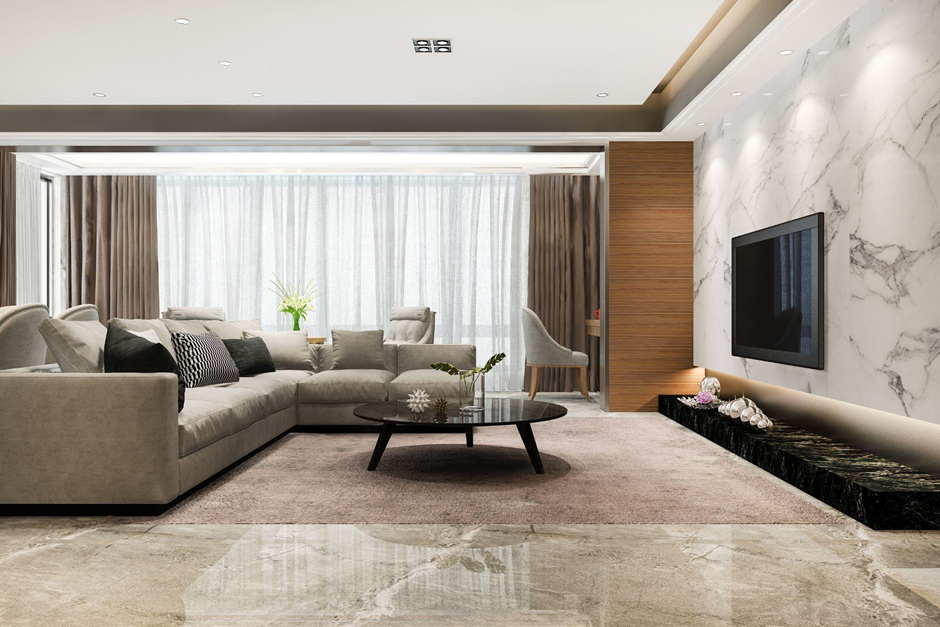
Natural stone slabs like Italian marble, granite, and quartzite enhance luxury Indian residences by increasing property valuation. Superior compressive strength, thermal mass properties, and long-term durability make natural stone a preferred choice over vitrified tiles for high-end residential interiors, offering high ROI and timeless aesthetic appeal.
Key Takeaways
- Natural stone slabs increase luxury property valuation through superior durability and aesthetic longevity.
- Thermal resistance and high compressive strength make stone ideal for Indian climatic conditions.
- Stone installations outperform synthetic ceramic alternatives in long-term return on investment (ROI).
An investment in luxury real estate requires premium materials that offer timeless aesthetics and lasting value. A study, “Estimating Property Condition Effect on Residential Property Value: Evidence from U.S. Home Sales Data”, published in the Journal of Real Estate Research, indicates that property condition, quality, internal specifications, and improvements can influence residential property values. Natural stone slabs, spanning imported marbles and dense granites, serve as structural and aesthetic anchors in modern Indian homes.
Thermal Efficiency and Structural Superiority
In Indian residential architecture, selecting floor materials is not limited to surface appearance.
- High-density stone slabs possess high thermal mass, allowing them to absorb ambient heat during the day and release it slowly at night. The natural cooling mechanism reduces reliance on artificial air conditioning, improving indoor climate control in tropical zones.
- Research published by CSIR-CBRI demonstrate the importance of evaluating properties such as compressive strength and water absorption when assessing building materials, including stone-based and manufactured products.
The table below compares imported natural stone and vitrified ceramic tiles across key performance and property-related parameters.
| Technical Parameter | Imported Natural Stone | Vitrified Ceramic Tiles |
| Compressive Strength | 100-180 MPa | 35-45 MPa |
| Lifespan | 50+ Years (Restorable) | 10 – 15 Years (Non-restorable) |
| Thermal Performance | High Thermal Mass (Cooling) | Low Thermal Retention |
| Property Value Impact | High Resale Value Addition | Standard Value |
Table: Imported Natural Stone vs. Vitrified Ceramic Tiles: Technical and Performance Comparison
Sourcing material from an established Indian marble company ensures access to dense dimensional stone processed with advanced resin treatments. High-value luxury homes utilize premium imports, frequently acquiring inventory processed by an Italian marble slab manufacturer in Kishangarh to guarantee uniform thickness and polished finishes.
Maintenance, Restoration, and Total Cost of Ownership
Unlike marble surfaces that may require replacement after significant cracking or surface wear, natural stone can often be repaired, honed, or diamond-polished to restore its appearance.
- Depending on the stone thickness, installation condition, and extent of wear, natural stone surfaces may undergo repeated professional polishing over their service life.
- Diamond grinding and polishing can remove superficial scratches, dullness, and minor surface imperfections, helping restore the finish without replacing the entire slab.
- Although natural stone may involve higher initial material and installation costs, its repairability and potential for surface restoration can reduce the need for complete replacement over a longer service period.
- Regular cleaning, appropriate sealing where required, and prompt treatment of spills help preserve natural stone and maximize its usable life.
Case Study: Mumbai Penthouse Renovation
A 4,000 sq. ft. penthouse in South Mumbai replaced porcelain floor tiles with 18mm imported natural stone slabs. The project logged a 12% rise in independent property appraisal value within 12 months.
- Over a 10-year projection, the ability to repolish the stone rather than replace broken tiles reduced predicted maintenance expenditure by 38%.
- The outcome also highlighted how proper installation, periodic sealing, and professional restoration can help preserve the stone’s appearance and extend its service life.
Integrating Stone Slabs for Maximum ROI
To maximize real estate valuation, architects recommend laying continuous, full-sized slabs with minimal grout lines to create an expanse of unbroken movement.
- Foyer and Living Areas: Position wide-format slabs with book-matched veining patterns to establish immediate visual impact.
- Wet Areas: Use honing or brushed finishes on natural stone surfaces to increase slip resistance without sacrificing elegance.
- Corridors: Source high-grade inventory from a reputable Indian marble company to ensure pattern continuity across long floor runs.
Partnering with a specialized Italian marble slabs manufacturer in Kishangarh offers precise access to calibrated cuts, minimizing joint spaces and elevating structural integrity.
Wrapping Up
Integrating natural stone slabs into luxury residential designs balances architectural beauty with measurable financial returns. Stone floors offer superior durability, thermal cooling, and effortless restoration potential. Choosing high-grade natural stone guarantees structural elegance and maximum market valuation of modern Indian properties for decades to come.
Elevate Your Residential Project Today
Explore premium stone collections to transform your home’s interiors. Contact our stone specialists today to request custom slab samples, technical specifications, or a tailored consultation for your upcoming architectural project.

