Hospitals operate in environments where time, safety, and precision are essential. Every system inside a healthcare facility must function reliably, and elevators are no exception. Unlike standard lifts, hospital elevators are designed to handle critical tasks such as transporting patients, medical staff, and life-saving equipment. This is why selecting the right hospital elevator manufacturer is one of the most important decisions for healthcare infrastructure.
Hospital elevators are built specifically for medical environments, where they must support continuous operation without failure. These elevators are not only used for convenience but also play a direct role in patient care. In emergency situations, delays in transportation can affect treatment outcomes, making elevator performance a crucial factor in hospital efficiency.
One of the most important features of hospital elevators is safety. These systems are equipped with advanced safety mechanisms, including emergency braking systems, door interlocks, overload protection, and backup power supply. These features ensure that the elevator continues to function even during power failures or unexpected situations. A reliable hospital elevator manufacturer focuses heavily on safety standards to ensure that patients and staff can rely on the system at all times.
In addition to safety, smooth and quiet operation is essential in healthcare settings. Patients, especially those in critical condition, require a calm and stable environment during transport. Hospital elevators are designed to minimize vibration and noise, providing a comfortable experience for patients and reducing stress during movement between floors.
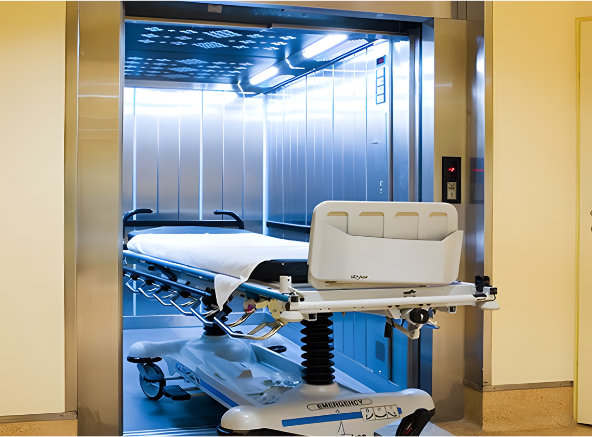
Another key aspect is space and accessibility. Hospital elevators are larger than standard passenger lifts to accommodate stretchers, wheelchairs, and medical equipment. Wide doors and spacious cabins allow easy entry and exit, ensuring that staff can move patients quickly and efficiently. Handrails, non-slip flooring, and clear control panels further enhance usability and safety.
Hygiene is also a major priority in hospitals. Elevator interiors are designed using materials that are easy to clean and resistant to bacteria. Some modern systems include antimicrobial surfaces and touchless controls to reduce the spread of infections. These features support the strict hygiene standards required in healthcare environments.
Hospital elevators come in different types depending on their function. Bed elevators are used to transport patients on hospital beds, while stretcher elevators are designed for emergency movement. Service elevators are used for medical equipment and supplies, and emergency elevators ensure operation during critical situations such as fires. Each type is engineered to meet specific healthcare needs while maintaining high safety and performance standards.
Technology continues to improve hospital elevator systems. Advanced control systems can prioritize certain calls, allowing emergency transport to take precedence over regular use. Smart monitoring systems enable real-time tracking and maintenance, helping prevent breakdowns and ensuring continuous operation. These innovations make hospital elevators more efficient and reliable.
Choosing the right supplier is essential for long-term performance. Not all manufacturers provide the same level of quality, and selecting the wrong one can lead to frequent maintenance issues and operational risks. Healthcare facilities often rely on advanced hospital elevator manufacturer solutions that are designed for durability, precision, and consistent performance in demanding environments.
Maintenance and after-sales support are equally important. Hospital elevators must be inspected and serviced regularly to ensure they remain in optimal condition. A dependable manufacturer provides ongoing support, quick access to spare parts, and professional maintenance services. This helps reduce downtime and ensures that the system is always ready for use.
Energy efficiency is another factor that modern hospitals consider. Elevators are used continuously, so reducing energy consumption can significantly lower operational costs. Modern systems use energy-efficient motors and smart control features to minimize power usage without affecting performance.
In conclusion, hospital elevators are a critical part of healthcare infrastructure, supporting both patient care and operational efficiency. A hospital elevator manufacturer plays a key role in delivering systems that meet the highest standards of safety, comfort, and reliability. By choosing a trusted manufacturer and investing in high-quality elevator solutions, hospitals can ensure smooth operations, better patient care, and long-term performance.
